
How many Acts are in Unscathed RNG Story Mode?
Public analysis consistently describes Story Mode as 8 Acts. Exact stage counts and per-Act boss structure still need current in-game verification.

Unscathed RNG Story Mode guide tracks Acts, bosses, rewards, upgrade walls, Aura checks, combat prep, and unverified enemy data warnings safely today.
Use the 8-Act overview below to plan Story progress, record enemy pools, and avoid unverified Boss HP claims.
~13 min read
This Unscathed RNG Story Mode guide gives a safe route through the confirmed shape of the mode: 8 Acts, single-player PvE progression, combat checkpoints, and NPC boss battles in the public analysis. It does not invent exact Boss HP, fixed stage counts, or final drop tables. Story is where your Aura roll, Normal/Critical rotation, skill tree, Gems, Traits, and potion discipline become real fight results.
Use this page as a Story routing map. The 8 Acts table tells you what to record and how to prepare, while every uncertain field stays marked as TBA or verify. That is intentional: third-party pages disagree on per-Act battle counts, boss structure, and enemy pools, so the correct Stage 3 answer is a strong overview plus a capture plan, not fake certainty.

| Fast fact | Safe answer |
|---|---|
| Mode | Story Mode is the PvE progression path for testing combat readiness. |
| Public structure | 8 Acts are consistently reported across analysis. |
| Reported content type | Single-player battles and NPC boss battles appear in public notes. |
| Unverified details | Per-Act stage counts, exact boss names, Boss HP, rewards, drops, and enemy pools. |
| Best companion page | Combat Guide for Normal/Critical rotation and Dojo split. |
| Data stance | Use verify-first labels for all specific enemies, pools, and rewards until captured in-game. |
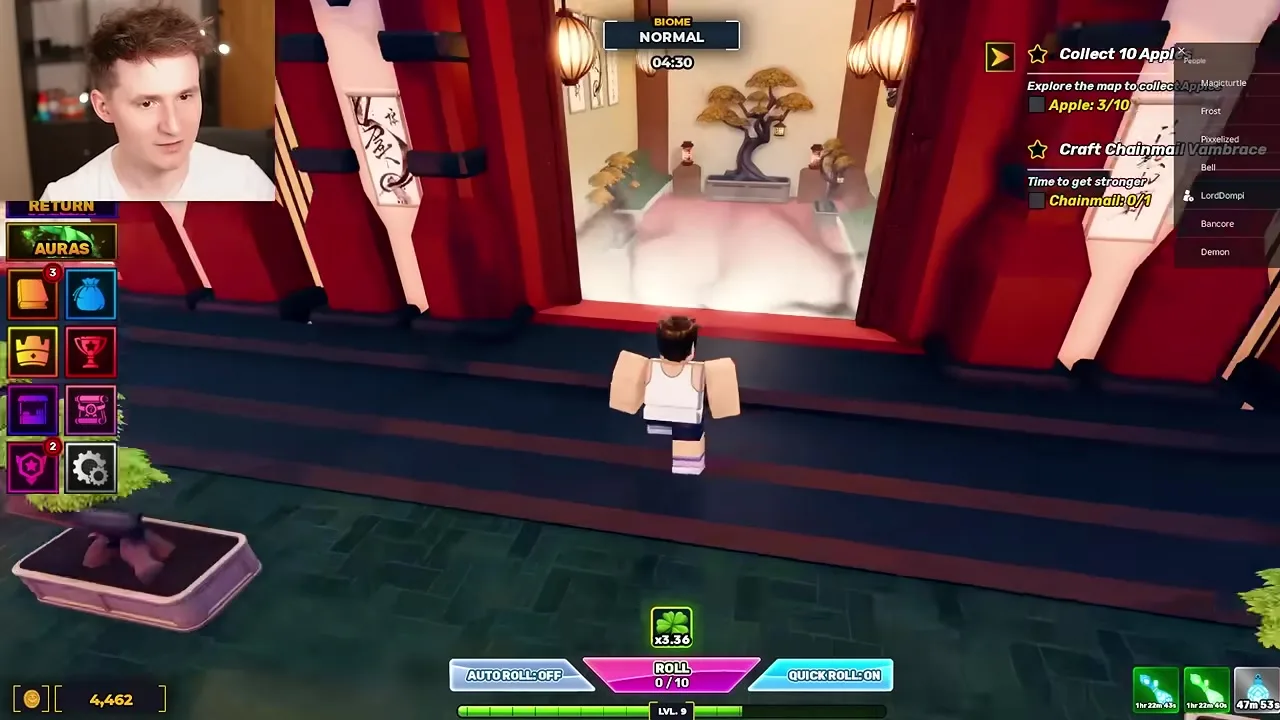
Story Mode is the cleanest PvE test in Unscathed RNG. The rest of the game can feel like preparation: rolling Auras, stacking luck, selling duplicates for XP, spending skill points, upgrading Gems, rerolling Traits, and saving potions. Story turns that preparation into a sequence of fights. If the build works, you move forward. If it fails, the failure tells you which layer is missing.

That is why Story should not be treated as a separate game from the RNG loop. A rare Aura helps only if its kit can handle the fight. A strong potion helps only if you spend it when the Act target matters. A skill tree route helps only if it fixes the actual gap, such as weak Normal damage, fragile survival, or unreliable Critical burst. Story is the place where all those choices meet.
| Story layer | Player question | Related guide |
|---|---|---|
| Aura kit | Can my current Aura fight, or is it just rare? | Auras |
| Combat rotation | Can I survive a missed Critical and still win? | Combat Guide |
| Permanent upgrades | Have I spent skill points before repeating the wall? | Skill Tree |
| Element planning | Does my Gem or Trait match the target element or biome plan? | Gems and Traits |
| Temporary boosts | Is this fight worth a potion timer? | Potions |
A checklist says "clear Act 1, then Act 2." A diagnostic asks why Act 2 failed. Maybe your Aura has no reliable Normal skill. Maybe the Critical missed and your plan had no backup. Maybe you ignored permanent upgrades after a lucky roll. Story becomes much easier to learn when each wall points to one fix.
New players often jump from codes to Story because a reward gave them a boost. That can work for early fights, but it wastes information if you never check the Aura, skill tree, Gem, and Trait layers. Preparation makes a failed Story attempt useful instead of random.
With the mode defined, the next section lays out the 8-Act overview without pretending the missing per-Act data is already confirmed.
The safest current Story Mode structure is an 8-Act overview. Public notes agree on the count, and video transcript evidence shows early Acts being played, but the exact number of stages per Act and the final boss structure need current client verification. Use this table as the live inventory for a future capture pass: each row tells you what the page can say now and what it must not fake.
For Stage 3, this is enough to answer the player intent. Someone searching for Unscathed RNG Story Mode wants to know how many Acts exist, what to prepare, what data is missing, and how to avoid repeating a failed fight with the same weak setup. They do not need invented Boss HP or recycled enemy names that may be wrong after the next update.
| Act | Current safe role | Verification note | Preparation focus |
|---|---|---|---|
| Act 1 | Early Story entry and first completion check | Public video transcript shows Act 1 completion around the early Story route; named boss and enemy pool still need direct capture. | Use a practical Aura, learn Normal turns, then upgrade before rushing ahead. |
| Act 2 | Second Story pressure check | Transcript footage reaches Act two, but exact stages, rewards, and enemy names are not stable enough to publish as final. | Bring a full-kit Aura if available and compare missed Critical risk. |
| Act 3 | Higher pressure combat check | Transcript footage references Act three and stronger Aura choices; do not copy spoken HP as a guide value. | Use this as the first serious rotation test after skill tree upgrades. |
| Act 4 | Mid-story progression slot | Public analysis says Story has 8 Acts; per-Act boss, stage count, and reward data are TBA. | Record enemy names, rewards, and whether element match matters. |
| Act 5 | Mid-late Story slot | Enemy pools should be captured from current client before any counter table is final. | Check Gems, Traits, and potion stock before repeating a wall. |
| Act 6 | Late Story slot | No confirmed Boss HP should be printed until in-game UI or repeated logs verify it. | Treat losses as diagnostics for Aura kit and permanent upgrades. |
| Act 7 | Pre-final Story slot | Recommended Aura and element rows are placeholders until current enemy data is captured. | Avoid spending rare boosts unless the target fight and reward are clear. |
| Act 8 | Final Act slot | Community notes mention The Final Descent and Ground Breaker with a high-end Aura pool, but this remains verify-first data. | Use only verified current data before writing boss names, pools, HP, or drop rules as facts. |
The available transcript gives useful context for Act 1 completion, Act two movement, and Act three combat. It is not a database. Spoken commentary can mention a health number, an Aura, or a quick strategy, but the page should not convert that into permanent guide data unless the UI itself is captured and checked against the current live build.
Leaving later Acts blank would be less useful than a structured verify table. The player still needs to know that 8 Acts exist and that each Act should eventually track boss, enemy pool, recommended Aura, element, Gem, Trait, potion, rewards, unlock, drops, mechanics, and strategy. The honest version marks those fields as pending capture.
The next section explains how to handle enemy pools and boss claims without turning uncertain notes into false facts.
Enemy pools are valuable because they connect Story Mode to the rest of the site. A pool can tell players which Aura family might appear, which element matters, what rewards to expect, and when a fight is worth farming. But enemy pools are also easy to corrupt. Public analysis mentions examples such as Act 1 starting pools and Act 8 high-end pools, while also warning that the exact enemy and boss structure conflicts across sources.
The rule for this site is simple: write the field, not the fake value. Every Story row can reserve space for Act, stage, enemy, boss, aura pool, recommended counter tier, rewards, drops, and mechanics. But until current gameplay confirms those fields, the value should be TBA or community_reported / verify. That keeps the page useful today and ready for a data pass tomorrow.
| Data field | Why players need it | Publishing rule |
|---|---|---|
| Enemy name | Helps players recognize the fight and search specific walls. | Publish after current UI capture. |
| Aura pool | Connects Story farming to Aura collection and combat builds. | Mark community_reported / verify until repeated or captured. |
| Boss name | Anchors future boss guides and internal links. | Publish only when the current Act UI or fight title confirms it. |
| Boss HP | Needed for kill-time math and damage calculators. | Do not publish in Stage 3 unless directly captured; no invented HP. |
| Rewards and drops | Tell players whether the fight is worth repeating. | Capture reward screen or reliable update note first. |
| Recommended counter | Turns a wall into an actionable build fix. | Base on combat tests, not one copied tier list row. |
The P1 plan includes enemies and bosses as expandable lookup pages. Story Mode should prepare for that by using consistent names and verification statuses now. Later, each enemy can link back to the Act, Aura pool, recommended counter, drops, and combat guide. For Stage 3, the safest move is a table of fields and rules.
HP is tempting because it makes a guide look complete. It also becomes misleading fast if the number comes from an old clip, a different build, or a spoken line without UI proof. This page avoids Boss HP until a capture pass records the fight and current damage context.
Once uncertain boss data is fenced off, the practical question becomes how to prepare for the next Act with the systems we do trust.
Prepare for the next Act by checking the build in layers. Start with the Aura because it defines the fight kit. Then check Normal and Critical rotation because a full kit still fails if the player spends burst at the wrong time. After that, check permanent upgrades: skill tree points, Gems, and Traits. Only when those are aligned should you consider timed potions.
This order keeps Story progress from becoming a potion sink. A potion can help a close fight, but it should not hide a broken setup. If your Normal skill cannot handle basic pressure, fix the Aura or upgrades first. If your Critical plan loses whenever the reported 70% accuracy misses, redesign the rotation before spending another timer.
| Prep layer | Ready sign | Warning sign |
|---|---|---|
| Aura | You know the Normal and Critical skills. | You only know the rarity or name. |
| Rotation | A missed Critical does not automatically lose. | The whole plan depends on one burst landing. |
| Skill tree | Points support combat, luck, or survival goals. | Points are unspent after repeated losses. |
| Gems and Traits | They match the target element or clear bottleneck. | They are random upgrades with no Act goal. |
| Potions | The fight is close and the timer will be used immediately. | You are drinking boosts to compensate for missing setup. |
Skill tree points, useful Gems, and keepable Traits improve more than one attempt. Potions improve a short window. If you are stuck and have permanent upgrades waiting, spend those first. Timed boosts are strongest when they finish a prepared plan, not when they cover a neglected account.
After a failed fight, write one line: Act, Aura, Normal result, Critical result, wall, next fix. That is enough. The point is not to create a spreadsheet for every attempt; the point is to stop repeating the same mistake without knowing which system needs attention.
The next section turns those notes into a simple wall-fixing decision table.
A Story wall is useful if it changes your next action. Do not reroll, reroll Traits, upgrade Gems, drink potions, and respec mentally all at once. Change one likely bottleneck, then retest. If the Normal skill is too weak, look at Aura kit and attack foundation. If one missed Critical ends the run, rebuild the rotation. If the fight is close, permanent upgrades or a carefully timed potion may be enough.
Use the table below as the short version. It keeps the fix tied to the symptom and points to the right page instead of making every wall sound like "get a better Aura." Sometimes the Aura is the issue. Sometimes the account is under-upgraded. Sometimes the data is simply not captured yet and the right next step is recording the fight.
| Story wall symptom | Likely bottleneck | Next action |
|---|---|---|
| Normal skill cannot keep up | Aura kit or Attack foundation | Compare Auras and Tier List, then test a full-kit option. |
| Critical miss loses the fight | Burst plan is too fragile | Read the Combat Guide and rebuild around a safer Normal turn first. |
| Damage is close but not enough | Permanent upgrades | Spend points in Skill Tree and check element Gems. |
| Fight feels random after many tries | Missing verification notes | Record enemy name, act, visible mechanics, and reward text before changing every system at once. |
| You want to use potions | Timing and target clarity | Use Potions only after the Story target and build gap are clear. |
If you change Aura, skill tree, Gem, Trait, and potion plan at the same time, you may clear the Act but learn nothing. That is fine for a one-off win, but bad for guide writing and bad for future walls. Change the most likely bottleneck first, then retest enough to know whether it mattered.
A close loss may justify a small upgrade or a potion. A blowout usually means the build is not ready, the rotation is wrong, or the enemy mechanic is misunderstood. Treat those differently. Spending premium boosts into a blowout is the Story equivalent of rolling during the wrong biome.
The final section lists the capture work needed before Story Mode can become a full walkthrough database.
Matched by build plan, shared topics, and guide progression — not random related links.
The next Story pass should be a data capture pass, not another writing pass. Record each Act from current gameplay: entry requirement, stage labels, enemy names, boss names, visible HP only if the UI shows it, Aura pool text, reward screen, unlock text, and any mechanics that change the rotation. That will let the site build enemy pages, boss pages, and a real Act walkthrough later.
Until then, this page should stay honest. It can say Story has 8 Acts, that the mode is PvE progression, that combat prep depends on Aura kits and upgrades, and that enemy pools are a key future data set. It should not pretend that every boss, HP number, drop, or counter is confirmed.
| Capture target | Needed for | Current status |
|---|---|---|
| Act labels and unlocks | A full 8-Act walkthrough. | 8-Act structure public; exact unlocks TBA. |
| Enemy names and pools | Enemy database and farming recommendations. | community_reported examples; verify-first. |
| Boss names and mechanics | Boss pages and combat counter tables. | partial / conflicting public notes. |
| Boss HP | Damage calculator and kill-time estimates. | intentionally omitted until captured. |
| Rewards and drops | Repeat-farm advice and progression routing. | TBA until reward screens are verified. |
| Recommended Aura / Gem / Trait | Practical Act prep tables. | derive from tests after enemy data is stable. |
Public analysis consistently describes Story Mode as 8 Acts. Exact stage counts and per-Act boss structure still need current in-game verification.
No. Boss HP is intentionally not listed because the current values need direct capture before they can be used safely.
Start with your Aura kit and combat rotation, then check Skill Tree, Gems, Traits, and potions.
Not as final tables. Enemy pools are a high-priority capture target, but specific values should stay community_reported / verify until recorded in-game.
Use potions for close, prepared attempts. If the fight is a blowout, fix Aura kit, skill points, Gems, or rotation before spending limited boosts.
Matched by build plan, shared topics, and guide progression — not random related links.